
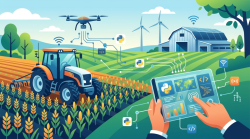
AgriTech 2026: The Digital Revolution in Polish Fields
Just a decade ago, agriculture was mainly associated with hard physical labor and traditional farming methods. In 2026, this sector has become one of the most technologically advanced areas of the economy, outpacing many heavy industry branches in terms of digitalization dynamics. AgriTech, or agricultural technology, is now a powerful ecosystem where Python developers and IoT engineers play key roles. For IT specialists seeking stability, Poland – as one of the European Union's agricultural leaders – is becoming an ideal place to build a career in this niche.
Why is Poland an AgriTech Hub in 2026?
Poland, with its vast agricultural land resources and strong production sector, faced the necessity of cost optimization in the face of climate change and rising energy prices. The implementation of precision systems has ceased to be a luxury and has become a requirement for profitability. Thanks to EU funds and the National Recovery Plan, Polish farms are mass-implementing Smart Farming solutions. Companies like SatAgro or local startups developing autonomous field robots are constantly looking for IT talent, offering stability that is often lacking in the dynamic but volatile SaaS or Fintech sectors.
Python: The Brain of the Modern Farm
Python dominates AgriTech for several reasons. Primarily, it is the first-choice language for Data Science and Machine Learning. In precision farming, data is everything. Python developers build algorithms that analyze satellite imagery (NDVI), weather data, and soil parameters to precisely dose fertilizers and plant protection products. Using libraries such as Pandas, Scikit-learn, or TensorFlow allows for predicting yields with unprecedented accuracy. Furthermore, Python is excellent for creating backends for Farm Management Information Systems (FMIS), which must integrate data from many dispersed sources.
IoT and 5G: The Nervous System of Precision Systems
Without the hardware layer, AgriTech could not exist. IoT specialists design sensor networks that monitor soil moisture, air temperature, and animal health in real-time. In 2026, the use of 5G connectivity and LoRaWAN protocols to transmit data from remote fields to the cloud has become the standard. Embedded engineers work on software for autonomous tractors and spraying drones, which must operate with centimeter precision thanks to RTK GPS systems. This is a fascinating field for those combining hardware knowledge with programming skills.
Employment Stability and Real Impact
For many developers, the key argument for moving to AgriTech is a sense of mission and stability. Food security is a global priority, which makes investments in this sector resistant to periodic economic slowdowns. Working in AgriTech is not just about writing code – it's about solving real problems, such as water waste or excessive chemical use. IT specialists in this sector can count on competitive salaries, often comparable to the banking sector, while experiencing lower levels of 'burnout' from purely consumer-oriented projects.
How to Enter the AgriTech Sector in 2026?
If you are considering a career change or looking for your first IT job, pay attention to job offers on ITcompare.pl. Look for positions such as Python Developer (with an emphasis on data analysis), IoT Engineer, Data Scientist, or GIS Specialist. It is also worth taking an interest in cloud technologies (Azure, AWS) and the basics of remote sensing. AgriTech in 2026 is a mature industry waiting for experts who can turn field data into concrete business decisions. It is a stable, future-proof career path that combines a passion for technology with care for our planet.