
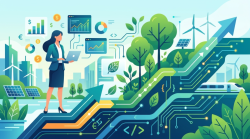
A Revolution at the Intersection of Capital and the Planet
Just a few years ago, the term "Climate Fintech" was the domain of niche startups. In 2026, the situation has changed dramatically. This phenomenon has become one of the strongest pillars of the modern economy, combining advanced financial technologies (Fintech) with the urgent need for decarbonization and environmental protection. For IT specialists, developers, and data analysts, working in this sector offers not only attractive salaries but, above all, a guarantee of professional stability in uncertain times.
Why is Climate Fintech a "Safe Haven" in 2026?
Job stability in Climate Fintech stems from hard legal regulations, not just a passing trend. In 2026, the EU's CSRD (Corporate Sustainability Reporting Directive) and ESRS standards have become a daily reality for thousands of companies in Poland and Europe. Businesses no longer have a choice – they must report their carbon footprint, manage climate risk, and optimize supply chains for ESG.
This generates massive demand for IT systems capable of:
- Automatically collecting and auditing non-financial data.
- Tokenizing carbon credits using blockchain.
- Utilizing Agentic AI for climate scenario modeling and investment portfolio optimization.
Unlike industries dependent on consumer trends, Climate Fintech is built on legislative requirements. Companies must invest in these technologies to avoid penalties and maintain access to bank financing.
The Most In-Demand Roles and Technologies
According to labor market data, specialists who combine technical knowledge with "green skills" can expect salary premiums of up to 25% compared to standard IT roles. Which positions dominate ITcompare in 2026?
- Green Software Engineer: Developers optimizing code for energy consumption and cloud efficiency (Carbon-aware computing).
- ESG Data Analyst: Big Data specialists who can transform chaotic data from IoT sensors and invoices into reliable environmental reports.
- Blockchain Developer (Carbon Markets): Experts building transparent emission trading platforms.
- AI/ML Engineer (Climate Modeling): Creators of algorithms predicting the impact of climate change on financial assets.
Ethics as a Magnet for Talent
In 2026, IT specialists are increasingly looking for a "sense of purpose" in their work. Climate Fintech solves this dilemma by offering the opportunity to have a real impact on the fight against global warming. Building systems that prevent greenwashing or direct billions of euros toward renewable energy sources provides satisfaction that is hard to find in traditional banking or e-commerce.
How to Enter the Climate Fintech Industry?
If you are planning to change your career path or want to specialize in the most promising market segment, start by:
- Learn the regulations: Understanding the basics of CSRD and the EU Taxonomy is key to recruitment interviews in fintech today.
- Develop cloud skills: Certifications in sustainable cloud computing (e.g., AWS or Azure Sustainability) are extremely valuable.
- Follow job postings on ITcompare: Our aggregator allows you to filter offers for ESG and Green Tech projects, gathering listings from the entire market in one place.
Summary
The combination of finance, ecology, and IT is the shortest path to building a crisis-proof career in 2026. It is a sector where technological innovation serves the most important goal of our time, and financial stability goes hand in hand with a clear conscience. Check current job openings in Climate Fintech on itcompare.pl and become part of the green digital transformation.